How to consolidate orders from multiple Chinese suppliers
If you sell more than one product, you probably buy from more than one supplier. And if you buy from more than one supplier, you’ve experienced the chaos: five shipments, five tracking numbers, five invoices, five customs declarations — and none of them arrive on the same day.
Consolidation is the fix. It’s the practice of routing all your orders through a single warehouse in China, where they’re combined into one shipment to you.
How consolidation works
- You keep ordering from your suppliers as usual. The only change is the delivery address: our warehouse instead of your freight forwarder’s.
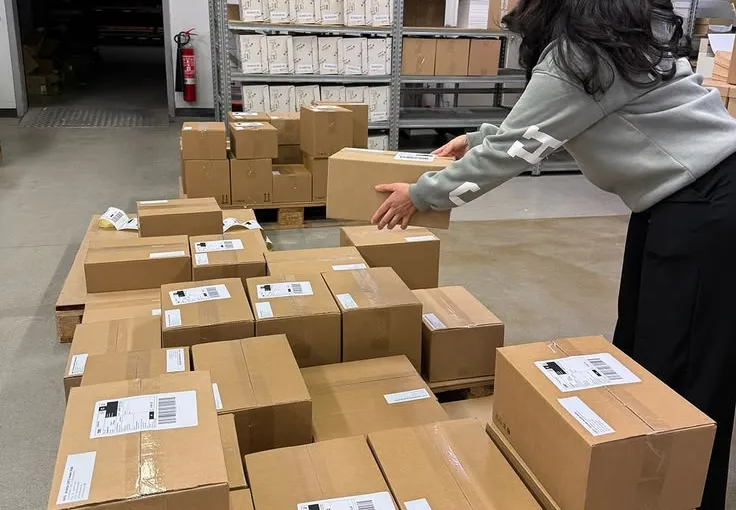
- Every order lands in one place. Each carton is checked in, logged against your purchase order, and inspected.
- We combine everything. Your small parcels become one shipment — one invoice, one customs declaration, one delivery.
- You pay one freight bill. Which is almost always smaller than the sum of the individual shipments it replaced.
Why it saves you money
Freight charges are heavily front-loaded. A small parcel and a large pallet both incur pickup, documentation, and handling fees, and small shipments pay the worst rates per kilogram.
When we consolidate, those per-shipment costs are paid once, and the combined volume qualifies for better freight rates. Sea freight consolidation can cut shipping costs by 30–60% compared to shipping each order separately — often enough that the consolidation service more than pays for itself.
The hidden benefit: control
Consolidation gives you a single checkpoint for everything you import. Instead of tracking down five suppliers to find out what’s ready, you get one status view of all your orders. If one supplier is late, we hold the rest of the shipment until it makes sense — or ship what’s ready and send the straggler in the next consolidation. You decide, with full information.
It also simplifies your books. One invoice per shipment means one cost line per restock, which makes landed-cost calculations and margin tracking dramatically simpler.
When consolidation makes sense
The short answer: almost always, if you buy from more than two suppliers. The break-even point is low — usually two or three shipments per restock cycle. And consolidation pairs naturally with repackaging: while your goods wait for the rest of the order, we can be relabeling, kitting, and repacking them so the final shipment arrives retail-ready.
Getting started
Consolidation doesn’t require changing suppliers or renegotiating anything. It starts with redirecting your next purchase order to a consolidation warehouse — and watching one delivery replace the pile of parcels you’re used to.